Airbnb Partner API vs. Third-Party APIs in 2026
The Airbnb Partner API is invite-only and manages your own listings. Third-party Airbnb APIs read the public marketplace. Here's the difference and which to use.
Two things get called “the Airbnb API,” and they’re not the same product. One you probably can’t get. The other you can use in a minute.
The Airbnb Partner API is Airbnb’s official, invite-only program for managing listings you operate. A third-party Airbnb API reads the public marketplace for listings you don’t. Picking the wrong one wastes weeks, so here’s the difference, who qualifies for the Partner API, and which fits your use case.
What is the Airbnb Partner API?
The Airbnb Partner API is Airbnb’s official integration program for vetted property management systems, channel managers, and activity platforms. It lets approved companies manage listings for hosts who connect their accounts: syncing calendars, updating pricing, and handling reservations. It is governed by Airbnb’s API Terms of Service, and it has no public developer portal or self-serve key.
In other words, it’s an operations tool, not a data feed.
If you run software that hosts use to manage their listings, the Partner API is how you write changes back to Airbnb on their behalf. It is not a way to study the market.
Can you actually get Partner API access?
Usually not on your own. As of 2026 the program is effectively closed to unsolicited applicants — Airbnb identifies and approaches prospective partners directly rather than taking open applications. There’s no signup form and no published docs you can read without a relationship. Access flows through approval, not registration.
When Airbnb does evaluate a partner, three things drive the decision:
- Business model — is the partnership commercially worthwhile for both sides?
- Technical infrastructure — can your systems handle the integration reliably?
- Shared-host support — can you support a user base you share with Airbnb?
That’s a high bar, and it’s the bar for the one official program that exists. Smaller teams, indie developers, and analysts rarely clear it, which is exactly why the third-party ecosystem exists.

What can the Partner API do, and not do?
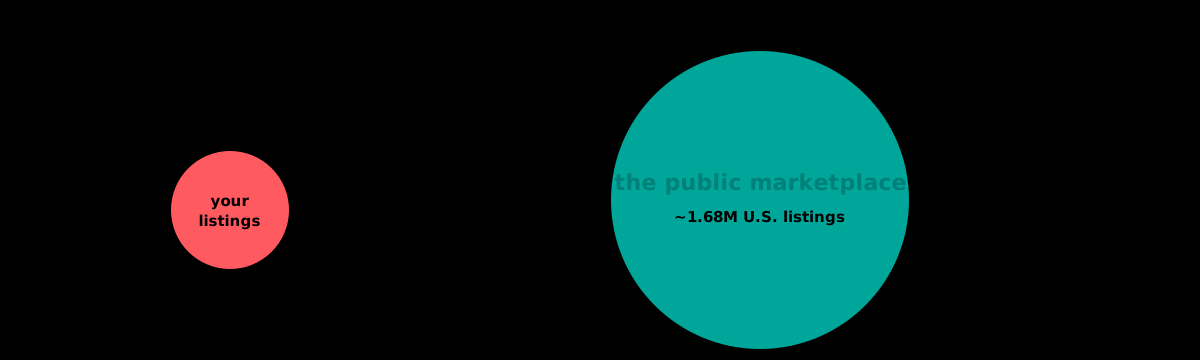
The Partner API manages listings on accounts that authorize your app: calendar sync, pricing updates, messaging, and reservation handling for connected hosts. It cannot read the public marketplace — you can’t query every two-bedroom in a city or pull a competitor’s reviews. Its world is the listings you’re authorized to operate, full stop.
This is the line that decides which API you need.
There are two completely different jobs hiding under “Airbnb API”:
- Manage listings you control — write calendars, prices, and reservations for your own or your clients’ listings. That’s the Partner API.
- Read listings you don’t — prices, availability, reviews, photos across the public marketplace. That’s a third-party API.
If your goal is market research, pricing intelligence, lead enrichment, or feeding an AI agent, the Partner API wouldn’t help even if you were approved.

How does a third-party Airbnb API compare?
A third-party Airbnb API is self-serve and reads public listing data. You sign up, generate a key, and call a REST endpoint that returns normalized JSON for any public listing — no invite, no approval queue. It can’t manage a host’s calendar, but it can read prices, availability, reviews, and host details across the whole marketplace, which the Partner API can’t.
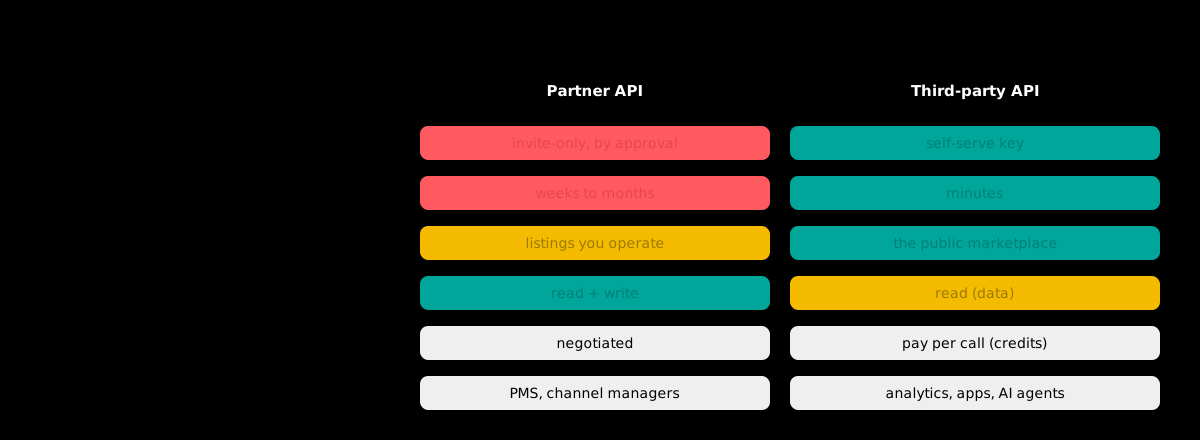
The contrast is sharp:
| Airbnb Partner API | Third-party Airbnb API | |
|---|---|---|
| Access | Invite-only, by approval | Self-serve key |
| Onboarding | Weeks to months | Minutes |
| Data scope | Listings you operate | Public marketplace |
| Direction | Read + write (manage) | Read (data) |
| Best for | PMS, channel managers | Analytics, apps, AI agents |
| Cost | Negotiated | Pay per call (credits) |
With Staying API, for example, you authenticate with a bearer key, get back a canonical Stay object, and start with 100 free credits — no card, no application. It’s the path most teams take once they realize the Partner API isn’t built for reading the market.
Which Airbnb API should you use?
Choose by the job, not the brand. If you operate listings and need to push calendar and pricing changes, pursue Partner connectivity — usually through a channel manager that already holds access. If you need marketplace data for analytics, pricing, lead enrichment, or AI agents, use a third-party API. Most data and product work falls in the second bucket.
A quick way to decide:
- You manage your own or clients’ listings → you need write access. Connect through an approved channel manager or PMS that has Partner API access.
- You need data on listings you don’t own → you need read access to the marketplace. Use a third-party Airbnb API.
- You’re not sure → it’s almost always the second one. Analytics, dashboards, pricing tools, and agents all read data; they don’t operate listings.

If you do manage listings, you rarely get the Partner API yourself anyway — you ride on a channel manager’s existing connectivity. That keeps the Partner API a niche tool for a few dozen platforms, and leaves third-party APIs as the default for everyone building on Airbnb data.
What about channel managers and connected software?
Most hosts and small platforms reach the Partner API indirectly, through API-connected software that already holds access. Channel managers and property-management systems are vetted Partner API holders; you connect your Airbnb account to them, and they handle the official integration. You get calendar sync and pricing automation without ever applying to Airbnb yourself.
That’s the practical answer to “how do I get Partner API access” for most operators: you don’t — you pick software that already has it.
It also clarifies the split. Connected software manages your listings through the Partner API. A third-party data API reads the wider market. Plenty of teams run both: a channel manager for operations, a data API for market intelligence.
Skip the gate if you just need data
The Partner API is real, official, and almost certainly not what you need unless you’re building host-facing operations software.
If you want listing data — prices, availability, reviews, photos at scale — don’t wait on an approval that may never come. Grab a free API key, pull your first listing in a minute, and see the JSON before you write any integration code. We covered the broader question in does Airbnb have an API if you want the full landscape.
Frequently asked questions
- What is the Airbnb Partner API?
- The Airbnb Partner API is Airbnb's official, invite-only integration program for vetted property management systems, channel managers, and activity platforms. It lets approved companies manage listings on behalf of hosts who connect their accounts — syncing calendars, pricing, and reservations. It is not a public data API and has no self-serve signup.
- Can I get access to the Airbnb Partner API?
- Usually not directly. As of 2026 the program is effectively closed to unsolicited applicants; Airbnb approaches prospective partners itself. It evaluates business model, technical infrastructure, and ability to support a shared base of hosts. Most developers who need listing data use a third-party Airbnb API instead, which is self-serve.
- What's the difference between the Partner API and a third-party Airbnb API?
- They do different jobs. The Partner API manages listings you're authorized to control — your own or your clients'. A third-party Airbnb API reads public marketplace data (prices, reviews, availability) for listings you don't own. The first is for operations; the second is for market intelligence, analytics, and apps.
- Can the Airbnb Partner API read other hosts' listings?
- No. The Partner API's scope is limited to listings on accounts that authorize your app. It can't query the open marketplace or pull a competitor's pricing and reviews. For that you need a third-party Airbnb API that returns public listing data, or you build a scraper.
- Do I need the Partner API to manage my own listings?
- Often you connect through an approved channel manager or PMS that already holds Partner API access, rather than getting it yourself. If you only need to read listing data — yours or the wider market — you don't need the Partner API at all; a third-party API is faster to set up.
- Which Airbnb API should I use?
- If you operate listings and need to sync calendars and pricing, pursue Partner connectivity, usually via a channel manager. If you need marketplace data for analytics, pricing tools, lead enrichment, or AI agents, use a third-party Airbnb API like Staying API — self-serve, normalized JSON, free to start.
Build it on real Airbnb data
Pull listings, photos, host info, reviews, availability, and pricing from one REST endpoint. 100 free credits, no credit card.