Airbnb API vs. Scrapers: Apify, Bright Data, or an API
Apify, Bright Data, or a maintained Airbnb API? A 2026 comparison of cost, reliability, and maintenance for pulling Airbnb listing data, with the real numbers.
You have three ways to pull Airbnb data at scale: an Apify Actor, a Bright Data scraper, or a maintained API. They look interchangeable until the first time Airbnb changes its markup at 4am.
This is a 2026 comparison of the three, with the real numbers: success rates, per-request costs, and the maintenance burden each one hands you. The short version: scrapers win on control, an Airbnb API wins on total cost once you count engineering time.
What are the three ways to get Airbnb data?
There are three practical options: Apify, a developer platform whose Airbnb Actor scrapes listings with zero custom code; Bright Data, a proxy-backed Web Scraping API with high success rates; and a maintained Airbnb API like Staying API, which returns normalized JSON for any public listing. The first two are scrapers you operate; the third is a contract someone else maintains.
Here’s the one-line version of each:
- Apify: a containerized “Actor” you configure with a location, dates, and filters. Exports JSON, CSV, or Excel. Flexible, pay per result plus compute.
- Bright Data: a Web Scraping API backed by a huge proxy pool. High success rate, billed per successful request.
- Maintained Airbnb API: one REST call returns a canonical
Stayobject. No proxies, no parsing, flat per-call pricing.
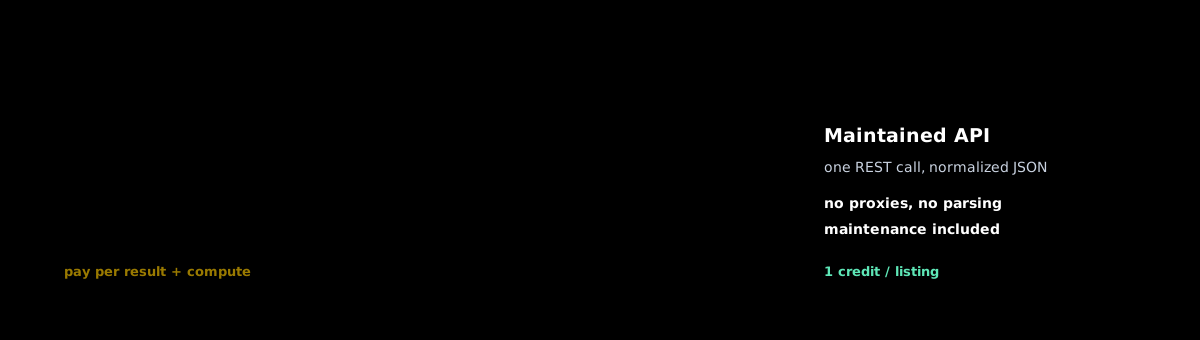
The choice isn’t really Apify vs. Bright Data. It’s “do I want to run a scraper at all?”
Why do Airbnb scrapers keep breaking?
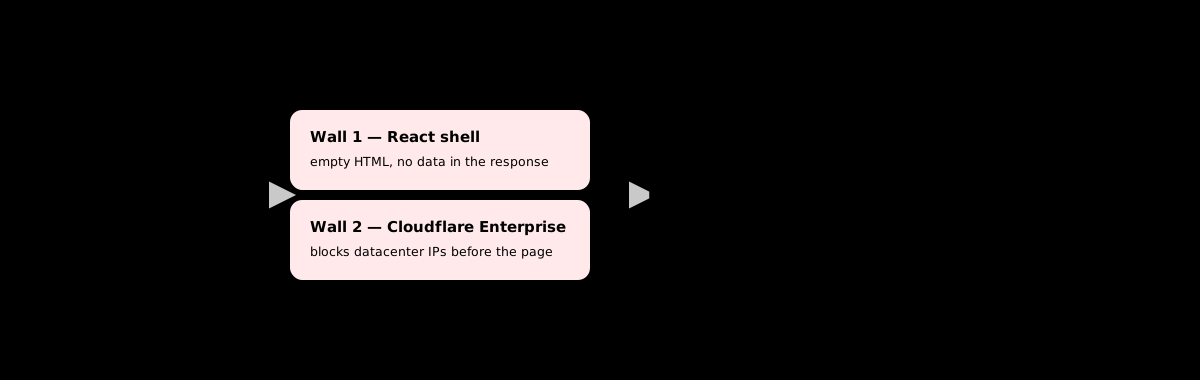
Airbnb is genuinely hard to scrape. The site runs on React, so a raw HTTP request returns an empty HTML shell with none of the listing data in it. It sits behind Cloudflare Enterprise bot protection that blocks datacenter IPs before they reach the page. So a working scraper needs a headless browser to render the page and a residential proxy pool to look human.
Then Airbnb ships a markup change and your selectors break.
That’s the loop every scraper team lives in: render, proxy, parse, patch, repeat. The per-request fee is the visible cost. The engineer who fixes the parser every few weeks is the invisible one, and usually the bigger one.
This is the gap a maintained API fills. It absorbs the rendering, proxies, and selector churn so you only ever see clean JSON.
How do Apify and Bright Data compare on reliability?
Bright Data publishes the strongest reliability numbers in the category: a 99% success rate on Airbnb with 48 structured fields per listing, and it doesn’t bill failed requests. Apify’s Airbnb Actor is more about configurability. You set location, dates, price range, and room type in a visual form and it returns title, price, host, reviews, amenities, photos, and availability.
So the split is roughly: Bright Data for raw success rate at volume, Apify for flexible custom jobs.
Both still hand you raw scrape output that you normalize yourself, and both still depend on proxies under the hood. The reliability is real, but it’s reliability at getting the page, not at keeping your integration stable when Airbnb changes.
How much does each one cost?
Bright Data’s Web Scraping API runs about $0.75 per 1,000 successful requests. Apify bills per result plus compute units. A maintained API prices per call instead. Staying API is 1 credit per listing lookup, 12 per search page, with 100 credits free to start. The sticker prices are close; the difference is what’s hidden underneath.
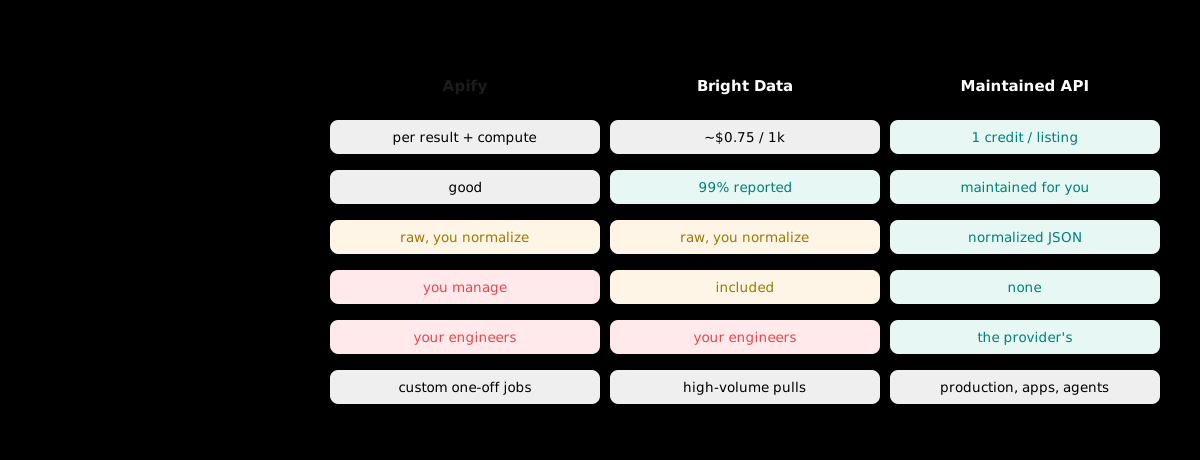
| Apify | Bright Data | Maintained API (Staying) | |
|---|---|---|---|
| Model | Per result + compute | ~$0.75 / 1k requests | 1 credit / listing |
| Success rate | Good | 99% reported | Maintained for you |
| Fields | ~Full listing | 48 structured | Canonical Stay shape |
| Output | Raw → you normalize | Raw → you normalize | Normalized JSON |
| Proxies | You/them manage | Included | None, not your problem |
| Maintenance | Your engineers | Your engineers | The provider’s |
| Best for | Custom one-off jobs | High-volume pulls | Production, apps, agents |
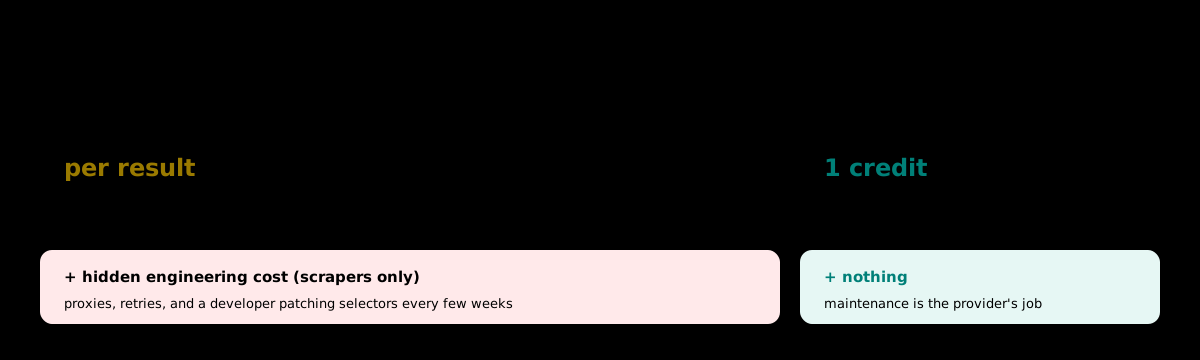
The line that matters isn’t in the table: the engineer-hours. A scraper that costs $0.75 per 1,000 rows but needs a developer one day a month to keep alive is far more expensive than its per-request fee suggests.
What’s the real total cost of ownership?
For a one-off research pull, a scraper is often cheapest. For anything ongoing, a maintained API usually wins, because scraper cost rises with every markup change while API cost stays flat. The crossover comes fast: once you’re running a pipeline in production, the maintenance hours dwarf the per-request savings.
Think of it as two cost curves.
A scraper’s curve starts low and climbs: proxies, retries, and the recurring engineering tax of broken selectors. A maintained API’s curve is close to flat: you pay per call and never touch a proxy.
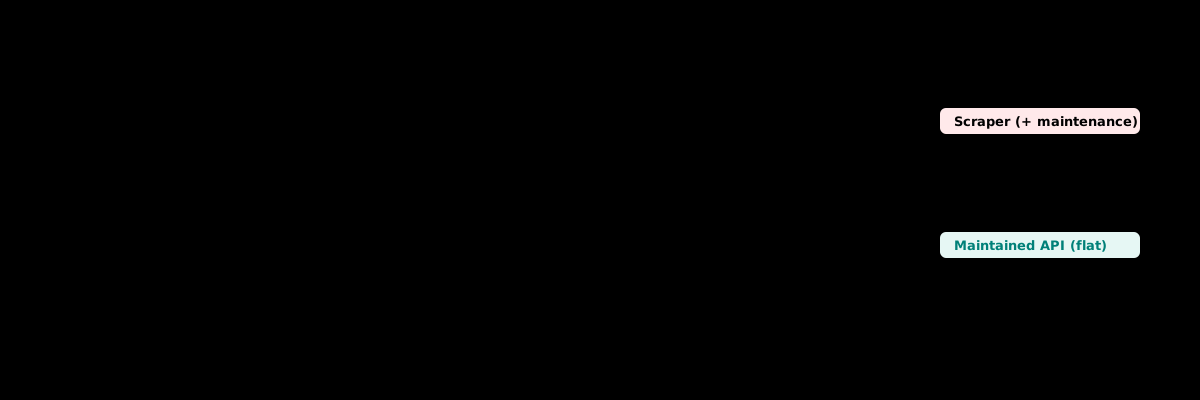
If Airbnb data is a one-time input, scrape it. If it’s part of a product or a recurring report, the API is the cheaper line within a quarter. We walked through the conceptual side of this in Airbnb scraping vs. an Airbnb API; this post is the tool-by-tool version.
Which should you choose?
Choose by how long you’ll need the data flowing. One-time market study with engineers on hand: Apify or Bright Data. Ongoing pipeline, app, or AI agent: a maintained Airbnb API, so you never babysit a proxy or a parser. Most teams that start with a scraper migrate once the maintenance tax shows up on a sprint board.
A quick decision guide:
- One-off pull, you have engineers → Apify (custom) or Bright Data (volume).
- Production pipeline or product → maintained API for the stable contract.
- AI agent / no time for upkeep → maintained API with an MCP server.
The migration path is short, too. A scraper returns the same fields an API does; you’re swapping brittle selectors for a stable endpoint, not rewriting your logic.
Skip the maintenance tax
Apify and Bright Data are good scrapers. The question is whether you want to own a scraper at all, with the proxies and 4am breakages that come with it.
If you’d rather write one request and get clean JSON back, grab a free API key (100 credits, no card) and pull a listing the maintained way. Then compare it to a scraper’s output and decide which one you want to maintain for the next year.
Frequently asked questions
- Is Apify or Bright Data better for scraping Airbnb?
- Both work well. Bright Data reports a 99% success rate with 48 fields per listing and bills per successful request, which suits high-volume one-off pulls. Apify's Actor is more configurable and developer-friendly for custom jobs. Neither removes maintenance; a maintained Airbnb API does, by returning normalized JSON with no proxies to manage.
- How much does it cost to scrape Airbnb data?
- Bright Data's Web Scraping API runs about $0.75 per 1,000 successful requests, and failed requests aren't billed. Apify charges per result plus compute. On top of either, budget engineering time to maintain selectors and proxies. A maintained API like Staying API folds that upkeep into a flat 1 credit per listing lookup.
- Why do Airbnb scrapers keep breaking?
- Airbnb runs on React, so a raw request returns an empty HTML shell with no listing data, and it sits behind Cloudflare Enterprise bot protection that blocks datacenter IPs. Scrapers need headless browsers and residential proxies, and they break whenever Airbnb changes its markup. That maintenance is the real cost, not the per-request fee.
- Is it better to scrape Airbnb or use an API?
- Scrape when you need full control over a custom job and have engineers to maintain it. Use a maintained Airbnb API when you want a stable JSON contract, no proxy management, and predictable cost. For most production pipelines and agents, the API wins on total cost of ownership once you count the engineering hours scrapers consume.
- Can you scrape Airbnb without getting blocked?
- Only with effort. Airbnb's Cloudflare Enterprise protection blocks datacenter IPs before they reach the page, so you need residential or mobile proxies, a headless browser to render the React app, and request pacing. Even then, blocks and markup changes are constant. A maintained API absorbs that work so you never see a captcha.
- What's the cheapest way to get Airbnb data?
- On sticker price, free dataset snapshots or a free API tier are cheapest. On total cost, a maintained API usually wins because it removes the engineering hours scrapers need for proxies and selector upkeep. Staying API starts free with 100 credits, then 1 credit per listing lookup, with no proxy bill and no maintenance.
Build it on real Airbnb data
Pull listings, photos, host info, reviews, availability, and pricing from one REST endpoint. 100 free credits, no credit card.